

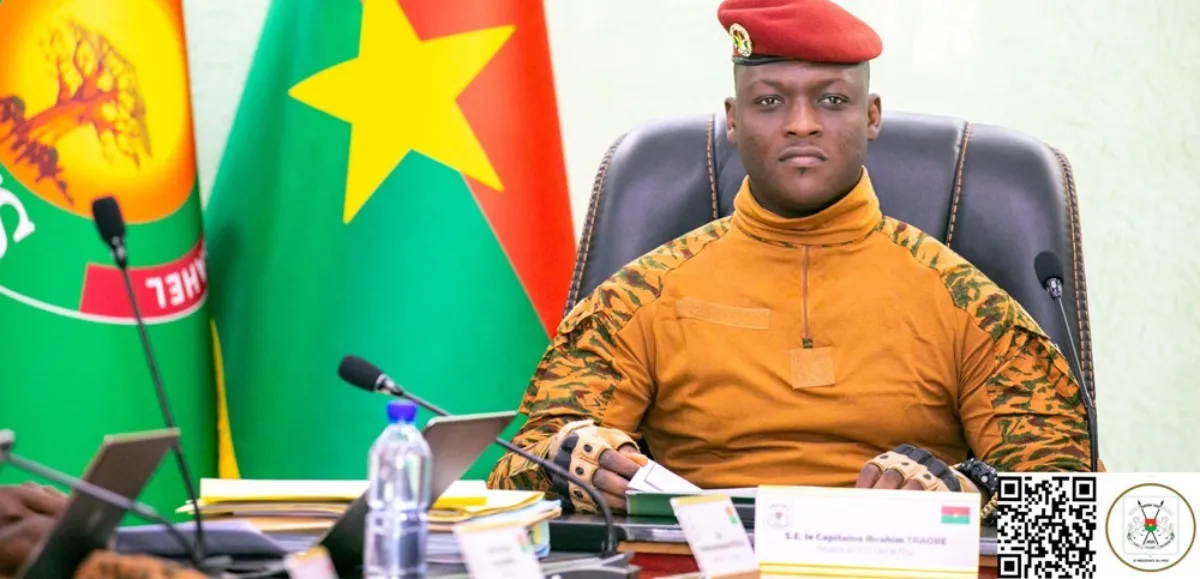
Ibrahim Traoré questions the role of democracy in Africa, sparking global debate on governance, security, and development. Explore the arguments for and against his bold stance.
Ibrahim Traoré has become one of the most talked-about figures in Africa today, especially after strong statements questioning whether Western-style democracy is the best path for African nations. His bold position—often summarized by the phrase “we don’t need democracy”—has sparked intense debate across the continent and beyond.
At the heart of Traoré’s argument is frustration with a system that, in many African countries, has not delivered the stability, development, or security people expected. In places like Burkina Faso, years of democratic governance have coincided with rising insecurity, economic struggles, and public dissatisfaction. For many citizens, elections alone have not translated into better living conditions.
Traoré and his supporters believe that what Africa needs most right now is not necessarily democracy in its Western form, but strong leadership focused on results. They argue that before talking about elections and political competition, governments must first ensure safety, food security, infrastructure, and national sovereignty. In regions affected by terrorism and instability, people often prioritize protection and order over political processes.
This perspective is not entirely new. Throughout history, several countries have temporarily shifted away from democratic systems during periods of crisis, focusing instead on centralized authority to restore order. Supporters of Traoré say Africa may be in such a moment—one that requires decisive leadership rather than prolonged political debates.
However, critics strongly disagree. They warn that rejecting democracy can open the door to authoritarian rule, where leaders may hold power without accountability. Democracy, despite its flaws, provides mechanisms like elections, free speech, and checks and balances that protect citizens from abuse of power. Without these safeguards, there is a risk that governments may become less responsive to the people they serve.
The debate also raises an important question: is the issue really democracy itself, or how it has been implemented? Some analysts argue that many African democracies are still young and have been weakened by corruption, external influence, and weak institutions. In this view, the solution is not to abandon democracy, but to reform and strengthen it so it truly serves the people.
Traoré’s message has gained traction among young Africans who are increasingly vocal about change. Many feel that traditional political systems have failed them and are open to alternative approaches that promise faster development and stronger national control over resources. His rise reflects a broader shift in political thinking across parts of Africa, where leaders are redefining governance models based on local realities rather than imported systems.
Still, the future remains uncertain. Whether Traoré’s approach will bring long-term stability and prosperity to Burkina Faso is something only time will tell. What is clear is that his statements have reignited a critical conversation about governance, sovereignty, and the best path forward for African nations.
In the end, the discussion is not just about rejecting or accepting democracy—it is about finding a system that truly works for the people. For many Africans, the priority is simple: leadership that delivers security, opportunity, and dignity. How that leadership is structured remains one of the most important questions shaping the continent today.